
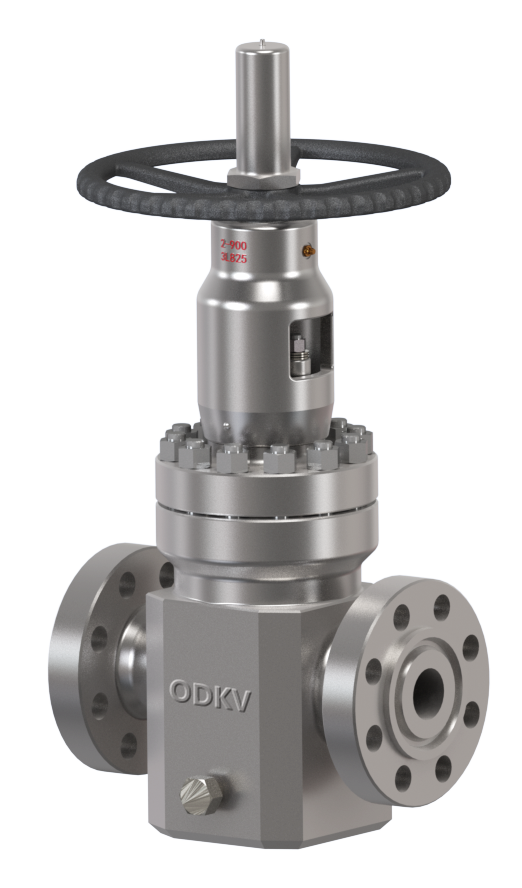
Forged Steel Slab Gate Valve
| Design Standard | API 6D, API 602, ASME B16.34 |
|---|---|
| Size Range | DN25 ~ DN1500 / NPS 1" ~ 60" |
| Pressure Rating | Class 150 ~ Class 2500 / PN16 ~ PN420 |
| Body Material | Forged ASTM A105 (Carbon Steel), ASTM A182 F11/F22 (Alloy Steel), ASTM A182 F304/F316 (Stainless Steel) |
| End Connection | Flanged (ASME B16.5, ASME B16.47), Butt-weld (ASME B16.25), Socket-weld (ASME B16.11), Threaded (NPT) |
Product Description
Key Features
Forged Steel Slab Gate Valve: Superior Strength for Critical Service Conditions
Forged Steel Slab Gate Valve: Superior Strength for Critical Service Conditions
Product Specifications
-
Product Name: Forged Steel Slab Gate Valve
-
Model/Series: Forged Slab Gate Valve Series
-
Size Range: DN25 ~ DN1500 / NPS 1″ ~ 60″
-
Pressure Rating: Class 150 ~ Class 2500 / PN16 ~ PN420
-
Connection Type: Flanged (ASME B16.5, ASME B16.47), Butt-weld (ASME B16.25), Socket-weld (ASME B16.11), Threaded (NPT)
-
Design Standard: API 6D, API 602, ASME B16.34
-
Body Material: Forged ASTM A105 (Carbon Steel), ASTM A182 F11/F22 (Alloy Steel), ASTM A182 F304/F316 (Stainless Steel)
-
Gate/Disc Material: Forged Steel + Hardfacing (Stellite/ENP), Stainless Steel
-
Seat Material: Floating seats with metal-to-metal seal, Optional soft seal inserts
-
Operation: Handwheel, Bevel Gear, Electric Actuator, Pneumatic Actuator, Hydraulic Actuator
-
Special Design: Through-conduit full bore, Double block & bleed (DBB), Body cavity pressure relief, Anti-static device, Anti-blowout stem, Fire-safe design (API 607/6FA), NACE MR0175 compliance, ISO 15848 low emission packing, Sealant injection system
-
Working Temperature/Media: -60°C to +160°C (standard carbon steel), up to 593°C for alloy materials; suitable for crude oil, natural gas, refined products, sour service, water, and steam
When Only Forged Steel Will Do
In high-pressure pipelines and critical processing facilities, the margin for error approaches zero. A valve failure in these applications doesn’t just mean downtime—it represents safety risks, environmental incidents, and substantial financial loss. For engineers and project managers responsible for hydrocarbon transmission, wellhead control, or high-pressure steam systems, the choice of isolation valve is a decision about risk management.
The Forged Steel Slab Gate Valve is engineered specifically for these demanding applications. Unlike cast valves, forged steel offers superior grain structure, higher strength-to-weight ratio, and absolute material integrity—qualities essential when pressures exceed Class 600 and temperatures push material limits -2.
The Forging Advantage: Material Integrity You Can Trust
Why Forging Matters
The fundamental difference between our slab gate valve and conventional alternatives lies in its construction. Every pressure-containing component is forged, not cast. The forging process aligns the grain structure of the steel, eliminating internal voids and creating a component with superior mechanical properties -7.
This translates to tangible benefits in the field:
-
Higher allowable stresses at elevated temperatures
-
Superior impact resistance in low-temperature services
-
Complete traceability with material test reports for every component
-
Reliability in cyclic services where cast valves might fatigue
Material Options for Every Service
The valve body is available in a range of forged materials to match your specific service conditions -2-3:
-
ASTM A105 – The industry standard for carbon steel service in moderate temperatures
-
ASTM A182 F11/F22 – Chrome-moly alloy steels for elevated temperature services up to 593°C
-
ASTM A182 F304/F316 – Stainless steels for corrosive services
-
ASTM A350 LF2/LF3 – Low-temperature carbon steels for services down to -60°C
-
Duplex and Super Duplex – For sour gas and highly corrosive environments
-
Nickel Alloys – Inconel, Monel, Hastelloy for the most aggressive media -2-3
For NACE MR0175 compliance in sour service environments, all materials can be supplied with appropriate hardness controls and certifications -2-3.
Advanced Trim Technology
The gate and seat rings represent the heart of the valve’s sealing capability. Our design incorporates:
-
Hardfaced sealing surfaces with Stellite or ENP (electroless nickel plating) to resist erosion, galling, and wire drawing -2-10
-
HVOF-applied tungsten carbide for abrasive services and high-temperature applications -5
-
Thermoplastic inserts available for bubble-tight sealing when required -5
The stem, manufactured from corrosion-resistant stainless steel (ASTM A182 F6a or equivalent), incorporates an anti-blowout design that prevents accidental stem ejection under pressure—a critical safety feature required by API 6D -1.
Engineering Excellence: Design Features That Matter
Through-Conduit Full Bore Design
When fully open, the gate retracts entirely into the valve bonnet, creating a smooth, unobstructed bore that matches the pipeline ID -1-5. This design delivers two critical benefits:
-
Zero pressure drop across the valve, reducing pumping costs
-
Piggability – Pipeline pigs and scrapers pass through freely, essential for maintaining pipeline efficiency and integrity
Double Block & Bleed Capability
In the closed position, our forged steel slab gate valve provides double isolation between upstream and downstream pressures. The body cavity can be bled to verify seal integrity, confirming that both seats are holding before maintenance begins -1-5. This DBB capability is a standard feature, not an option -5.
Self-Relieving Seats
The floating seat design incorporates single piston effect – if pressure in the body cavity exceeds line pressure (due to thermal expansion or other causes), the upstream seat automatically retracts, relieving the excess pressure into the line -5. This prevents over-pressurization of the valve body while maintaining sealing integrity under normal operation -1-2-3.
Sealant Injection System
For applications requiring absolute zero leakage or for emergency situations, sealant injection fittings are provided. If seat damage occurs, sealant can be injected to restore sealing temporarily, allowing the valve to remain in service until a scheduled maintenance window -1-5.
Fire-Safe Design
All valves can be supplied with fire-safe design certified to API 607 or API 6FA, ensuring that even if soft components are consumed in a fire, the metal-to-metal contact maintains sealing integrity -1.
Low Emission Packing
For applications requiring strict fugitive emissions control, low emission packing systems certified to ISO 15848 are available -1-2-3.
Critical Applications: Where This Valve Proves Its Value
Oil & Gas Transmission Pipelines
In cross-country pipelines handling crude oil, natural gas, and refined products, our forged steel slab gate valves serve as mainline block valves, launcher/receiver traps, and sectionalizing isolation points -1. The full bore design ensures pigs pass freely, while the DBB capability allows safe maintenance without de-pressuring long pipeline segments -1.
Wellhead and Production Manifolds
For wellhead applications, these valves withstand the high pressures and abrasive fluids typical of oil and gas extraction. Available configurations meet the stringent requirements of API 6A for wellhead equipment where applicable -7.
Refineries and Petrochemical Plants
In processing facilities, these valves provide reliable isolation for feedstocks, intermediates, and finished products at elevated temperatures. Alloy steel materials (F11/F22) extend the temperature range well beyond carbon steel limits -10.
Gas Storage and Distribution
For city gate stations and underground storage facilities, the valves offer the reliable, long-term performance required for infrastructure that must operate safely for decades -1.
Sour Service (NACE) Applications
With appropriate material selection and hardness controls, these valves are fully compliant with NACE MR0175 for wet H₂S service -2-3.
Maintenance That Respects Your Schedule
We understand that every hour of unplanned downtime carries a significant cost. The forged steel slab gate valve is designed with this reality in mind.
Online Maintenance Capability
The top-entry design of our slab gate valve allows access to internal components without removing the valve from the pipeline -1. For valves specified with this feature, seats can be replaced while the valve remains in the line—a critical advantage during tight turnaround windows.
Emergency Sealant Injection
As described above, the sealant injection system provides a temporary fix for seat damage, allowing operations to continue until scheduled maintenance -1-5.
Operator Options
For smaller valves (up to NPS 2″), a handwheel is standard. For larger sizes, a bevel gear operator reduces manual effort and ensures smooth, controlled operation -2-3. Where automation is required, electric, pneumatic, or hydraulic actuators can be mounted to the standard ISO top flange, enabling remote operation and integration with SCADA systems -1-2-3.
Testing and Certification
Every valve undergoes rigorous testing before shipment:
-
Shell test at 1.5 times rated pressure
-
Seat tests in both directions per API 598
-
Optional low fugitive emission testing per ISO 15848
-
Positive Material Identification (PMI) on all pressure-containing components
-
Complete documentation package including material test reports
The Bottom Line on High-Pressure Isolation
For the project engineer or procurement specialist, selecting a forged steel slab gate valve is a decision about risk management. Our valves represent a commitment to material integrity, positive isolation, and long-term reliability in the most demanding services.
By combining the superior metallurgy of forged steel—from ASTM A105 to advanced alloys—with strict API 6D design standards and features like DBB capability, self-relieving seats, and sealant injection, we deliver a solution that doesn’t just meet specifications: it performs when it matters, year after year, in pipelines and facilities around the world.
Contact our engineering team today to discuss your specific line sizes, pressure requirements, or to request material certification packages.
-