
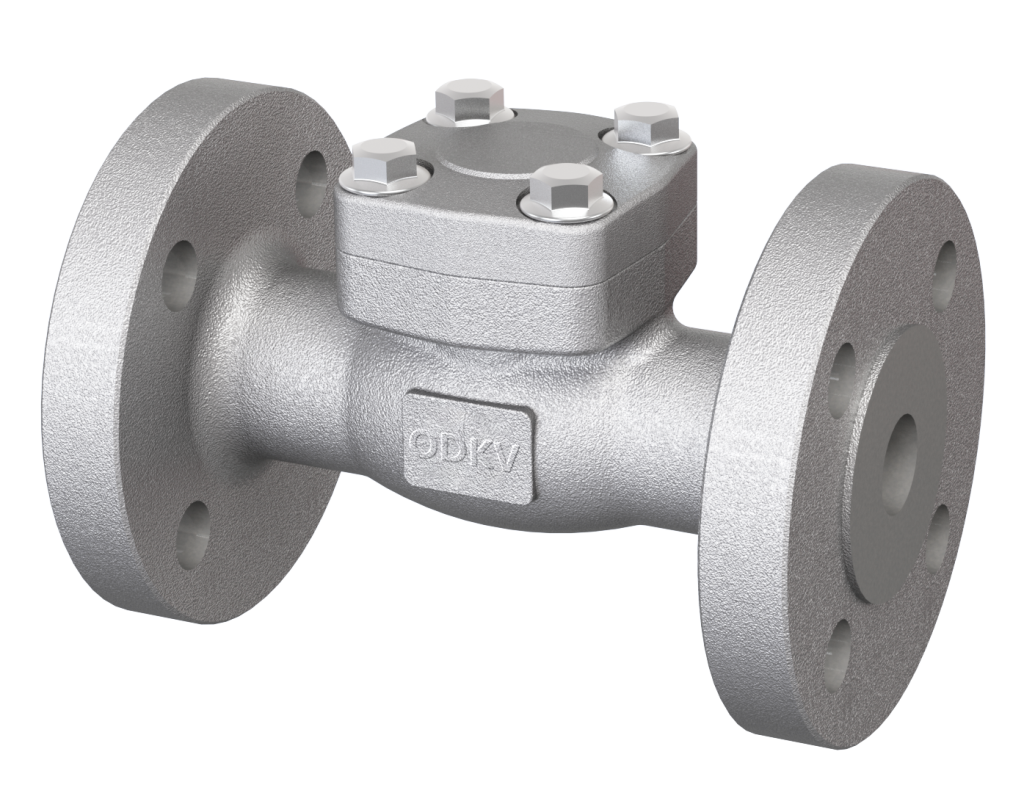
Forged Steel Check Valve
| Design Standard | API 602, ASME B16.34, BS 5352, MSS SP-118, GB/T 12235 |
|---|---|
| Size Range | 1/2" - 8" (DN15 - DN200), customizable for special size requirements |
| Pressure Rating | Class 150 - Class 2500 (PN16 - PN420), suitable for ultra-high pressure pipeline systems |
| Body Material | Carbon Steel (A105N), Alloy Steel (F11, F22), Stainless Steel (F304L, F316L, F321, F347), Monel, Alloy 20 |
| End Connection | Flanged (ANSI B16.5, GB/T 9113), Socket Weld (ANSI B16.11), Butt Weld (ANSI B16.25), Threaded (NPT, BSPP) |
Product Description
Key Features
Forged Steel Check Valve: High-Pressure, High-Reliability Solution for Industrial Piping Systems
|
Product Parameter
|
Details
|
|---|---|
|
Product Name
|
Forged Steel Check Valve
|
|
Model/Series
|
FCV-S (Swing Type), FCV-L (Lift Type), FCV-B (Ball Type)
|
|
Size Range
|
1/2″ – 8″ (DN15 – DN200), customizable for special size requirements
|
|
Pressure Rating
|
Class 150 – Class 2500 (PN16 – PN420), suitable for ultra-high pressure pipeline systems
|
|
Connection Method
|
Flanged (ANSI B16.5, GB/T 9113), Socket Weld (ANSI B16.11), Butt Weld (ANSI B16.25), Threaded (NPT, BSPP)
|
|
Design Standard
|
API 602, ASME B16.34, BS 5352, MSS SP-118, GB/T 12235
|
|
Body Material
|
Carbon Steel (A105N), Alloy Steel (F11, F22), Stainless Steel (F304L, F316L, F321, F347), Monel, Alloy 20
|
|
Disc/Stem Material
|
Disc: 410, 304, 316, F51; Stem: 17-4PH, 316L, Hastealloy (wear-resistant and corrosion-resistant)
|
|
Seat Material
|
Metal-to-Metal (Stellite overlay, HRC ≥ 58), PTFE, Graphite, EPDM (customizable based on media)
|
|
Operation Method
|
Automatic (relying on media flow pressure to open/close, no external power required)
|
|
Special Design
|
Pressure self-sealing bonnet (higher pressure, more reliable sealing); built-in spring option for quick closing; Y-type flow channel (reducing flow resistance by 30%-50%); anti-water hammer structure
|
|
Operating Temperature/Media
|
Temperature: -29℃ ~ 550℃; Media: Steam, Oil, Gas, Water, Chemicals (acid, alkali, corrosive media), Natural Gas, Liquefied Gas
|
Core Advantages: Solving Key Industrial Pain Points

Our Forged Steel Check Valve is designed to target the most common pain points faced by industrial professionals in piping system operation, ensuring long-term stability and cost savings.
1. Zero Backflow & Tight Sealing to Protect Critical Equipment

Backflow is one of the most damaging issues in industrial pipelines, often causing pump reverse rotation, equipment wear, and media contamination. Our valve adopts a precision-ground disc and seat with Stellite overlay (hardness ≥ HRC 58), combined with a pressure self-sealing bonnet design—where the higher the system pressure, the tighter the seal. This structure ensures zero leakage even under ultra-high pressure and frequent temperature fluctuations, effectively preventing backflow and protecting pumps, turbines, and other core equipment from damage, reducing unplanned downtime and maintenance costs significantly[6].
2. High-Strength Forged Body for Harsh Working Conditions

Unlike cast steel valves, our Forged Steel Check Valve features a forged body made of high-quality carbon steel, alloy steel, or stainless steel. The forging process eliminates internal defects such as porosity and cracks, making the valve body denser, with higher tensile strength and impact resistance. This enables the valve to withstand extreme temperatures (-29℃ ~ 550℃) and pressures (up to Class 2500), adapting to harsh working environments such as high-temperature steam pipelines and corrosive chemical transfer systems without deformation or failure.
3. Low Flow Resistance & Anti-Water Hammer Design for System Efficiency

Traditional check valves often suffer from high flow resistance, which increases energy consumption, or water hammer effects, which damage pipeline components. Our valve addresses this with a Y-type flow channel design (for FCV-L series) that reduces flow resistance to 30%-50% of conventional valves, improving system efficiency and reducing energy costs. Additionally, the optional built-in spring ensures quick and smooth closing of the disc when media flow reverses, eliminating water hammer noise and impact, and extending the service life of both the valve and the entire pipeline system.
4. Wide Compatibility & Customization to Meet Diverse Needs

We understand that different industrial projects have unique requirements. Our Forged Steel Check Valve offers a wide range of material options (from carbon steel to corrosion-resistant alloys like Monel and Alloy 20) and connection methods (flanged, socket weld, butt weld, threaded), compatible with various media including steam, oil, gas, and corrosive chemicals[5]. We also provide customized solutions for special sizes, pressure ratings, and media conditions, ensuring the valve perfectly matches your project’s specific requirements.
Technical Details: Precision Engineering & High-Quality Materials

The reliability of our Forged Steel Check Valve stems from rigorous technical design and strict material selection, ensuring every component meets industrial standards and performs stably in long-term operation.
Material Selection: Durability & Corrosion Resistance

We select materials in strict accordance with ANSI/ASTM standards to ensure compatibility with different working conditions. The valve body is available in A105N carbon steel (for general high-pressure applications), F11/F22 alloy steel (for high-temperature environments), and F304L/F316L stainless steel (for corrosive media)[5]. The disc and stem are made of wear-resistant and corrosion-resistant materials such as 17-4PH and 316L, while the seat can be customized with metal-to-metal or soft sealing materials (PTFE, Graphite) based on media characteristics, ensuring long service life and reliable sealing.
Design Highlights: User-Centric & Reliable

Our valve features three optional bonnet designs to adapt to different pressure requirements: bolted bonnet (easy for maintenance), welded bonnet (zero leakage), and pressure self-sealing bonnet (suitable for ultra-high pressure systems)[6]. The disc is available in swing, lift, and ball types: swing type for large flow conditions with low resistance, lift type for strict sealing requirements, and ball type for quick response[6]. All valves undergo strict testing in accordance with API 598 and GB/T 13927 standards, including pressure test, leakage test, and material composition analysis, to ensure each product meets quality requirements before leaving the factory[5].
Application Scenarios: Suitable for Multiple Industrial Fields

With its excellent performance and wide compatibility, our Forged Steel Check Valve is widely used in various industrial fields that require reliable one-way flow control, especially in high-temperature, high-pressure, and corrosive environments:
•
Petrochemical Industry: Used in high-temperature and high-pressure pipelines for oil refining, chemical synthesis, and natural gas/liquefied gas transmission, preventing backflow of corrosive media and protecting compressors and reaction equipment[7].
•
Power Generation Industry: Applied in boiler feedwater lines, steam pipelines, and condensate systems of thermal power plants and nuclear power plants, preventing backflow of hot steam or water and protecting turbines and pumps from damage[7].
•
Metallurgical Industry: Suitable for high-pressure pipelines in steelmaking, non-ferrous metal smelting, and other processes, withstanding high temperatures and harsh media to ensure stable operation of the system.
•
Chemical Industry: Used in pipelines for acid, alkali, and other corrosive media transmission, with corrosion-resistant material options to prevent media leakage and equipment contamination