
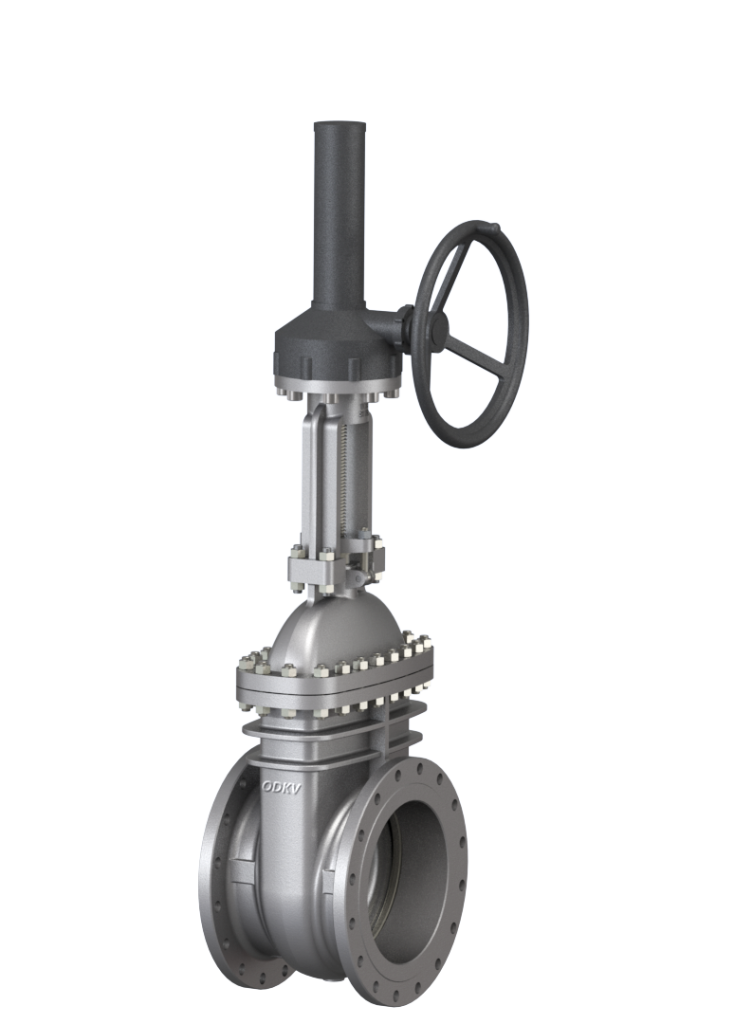
Slab Gate Valve
| Design Standard | API 6D, ASME B16.34 |
|---|---|
| Size Range | DN50 ~ DN1500 / NPS 2" ~ 60" |
| Pressure Rating | Class 150 ~ Class 2500 / PN10 ~ PN420 |
| Body Material | ASTM A216 WCB (Carbon Steel), Stainless Steel, Alloy Steel |
| End Connection | Flanged (ASME B16.5, ASME B16.47), Butt-weld (ASME B16.25), Hub Connection |
Product Description
Key Features
Slab Gate Valve: Positive Isolation for Critical Pipeline Services
Product Specifications
-
Product Name: Slab Gate Valve
-
Model/Series: Slab Gate Valve Series
-
Size Range: DN50 ~ DN1500 / NPS 2″ ~ 60″
-
Pressure Rating: Class 150 ~ Class 2500 / PN10 ~ PN420
-
Connection Type: Flanged (ASME B16.5, ASME B16.47), Butt-weld (ASME B16.25), Hub Connection
-
Design Standard: API 6D, ASME B16.34
-
Body Material: ASTM A216 WCB (Carbon Steel), Stainless Steel, Alloy Steel
-
Gate/Disc Material: Carbon Steel + Hardfacing (Stellite/ENP), Stainless Steel
-
Seat Material: Floating seats with O-rings, Metal-to-metal with hardfacing, Optional soft seals
-
Operation: Handwheel (standard), Bevel Gear, Electric, Pneumatic, Hydraulic
-
Special Design: Through-conduit design, Double block & bleed (DBB) capability, Double isolation & bleed (DIB) capability, Body cavity relief, Anti-static device, Anti-blowout stem, Sealant injection system, Fire-safe design (API 607/6FA)
-
Working Temperature/Media: -29°C to 350°C (up to 593°C for alloy materials); suitable for crude oil, natural gas, refined products, water, and steam
When Isolation Cannot Be Compromised
In long-distance pipelines and critical processing facilities, a valve failure means more than just downtime—it represents safety risks, environmental hazards, and significant financial loss. For engineers and project managers responsible for hydrocarbon transmission, the difference between controlled operations and emergency response often comes down to one component: the isolation valve.
The Slab Gate Valve is engineered specifically for these demanding applications. Unlike conventional gate valves, the slab gate valve features a through-conduit design with a flat gate that retracts entirely into the valve bonnet, creating a full, unobstructed bore when open and providing positive, bubble-tight shut-off when closed -1-2.
Engineering for Absolute Reliability
Design Philosophy
Manufactured in accordance with API 6D and ASME B16.34, our slab gate valves incorporate a floating seat design that delivers exceptional sealing performance across a wide pressure range -1. At low pressures, pre-loaded springs energize the seats against the gate. As line pressure increases, the medium itself forces the upstream seat tighter against the gate—creating a self-energizing seal that actually improves with higher system pressure -2-7.
The valve is available in sizes from DN50 to DN1500 (NPS 2″ to 60″) with pressure ratings spanning Class 150 through Class 2500 -1-9. Whether your application requires flanged ends (ASME B16.5/B16.47) for easy maintenance access or butt-weld ends (ASME B16.25) for permanent, leak-free installation, we configure the valve to match your piping specifications.
Material Excellence
The valve body is available in ASTM A216 WCB carbon steel—the industry standard for carbon steel valves in moderate-temperature services—as well as stainless steels and alloy materials for corrosive or high-temperature applications -9.
Critical sealing surfaces receive special attention. The gate and seat rings feature hardfacing with Stellite or ENP (electroless nickel plating) , providing exceptional resistance to erosion, galling, and wire drawing -1-9-10. This ensures the valve maintains its sealing integrity cycle after cycle, even in abrasive services or applications with suspended particles -2.
The stem, manufactured from corrosion-resistant stainless steel, incorporates an anti-blowout design that prevents accidental stem ejection under pressure—a critical safety feature required by API 6D -4.
Advanced Sealing Technology
Our slab gate valves offer multiple isolation capabilities:
-
Double Block & Bleed (DBB) : When closed, the valve isolates upstream pressure from downstream, allowing the cavity to be bled to verify seal integrity -7
-
Double Isolation & Bleed (DIB) : Provides two independent sealing barriers against pressure from either direction -7
-
Body Cavity Relief: Automatic pressure relief prevents over-pressurization of the valve body due to thermal expansion -4-7
For applications requiring zero leakage, sealant injection fittings are provided, allowing emergency sealing of the seats without removing the valve from service -1.
Where Slab Gate Valves Deliver Value
Oil & Gas Pipelines
In transmission pipelines handling crude oil, natural gas, and refined products, slab gate valves are the industry standard for mainline block valves, launcher/receiver traps, and sectionalizing isolation -2-7. The through-conduit design with full bore allows pipeline pigs to pass through freely when the valve is fully open—essential for maintaining pipeline efficiency and integrity -2-4-9.
Wellhead and Production Facilities
For wellhead applications and production manifolds, our slab gate valves withstand the high pressures and abrasive fluids typical of oil and gas extraction. Available configurations meet the stringent requirements of API 6A for wellhead equipment -4-5.
Refineries and Petrochemical Plants
In processing facilities, these valves provide reliable isolation for feedstocks, intermediates, and finished products. The ability to achieve double isolation makes them ideal for applications where absolute positive shut-off is required before maintenance activities -7.
Gas Storage and Distribution
For city gas distribution networks and storage facilities, slab gate valves offer the reliable, long-term performance required for infrastructure that must operate safely for decades -2-9.
Power Generation and Water Services
While primarily associated with hydrocarbons, slab gate valves are equally suitable for high-pressure steam, boiler feedwater, and large-diameter water transmission lines -2.
Maintenance That Minimizes Downtime
We understand that every hour of unplanned downtime carries a significant cost. The slab gate valve is designed with this reality in mind.
In-Service Sealability
The sealant injection system allows operators to restore seat sealing temporarily without taking the valve out of service—a critical capability when an unexpected leak develops during operation -1. This feature alone can mean the difference between a planned repair and an emergency shutdown.
Accessible Design
The bolted bonnet configuration provides straightforward access to internal components. For larger valves (typically DN300 and above), the standard bevel gear operator reduces manual effort and ensures smooth, controlled operation -9. Where automation is required, electric, pneumatic, or hydraulic actuators can be mounted to the standard ISO top flange, enabling remote operation and integration with SCADA systems -5-9.
Long Service Life
The combination of hardfaced seating surfaces and floating seat design minimizes wear during operation. When wear eventually occurs, the seats are designed for replacement without special tooling or complex procedures. Some designs even allow seat retraction by applying pressure through the sealant injection ports, facilitating gate removal without taking the valve out of the line -8.
Every valve undergoes rigorous testing in accordance with API 6D and API 598, including shell tests, seat tests, and where specified, fugitive emission testing per ISO 15848 -4-9.
The Bottom Line on Pipeline Isolation
For the project engineer or procurement specialist, selecting a slab gate valve is a decision about operational continuity and safety. Our slab gate valves represent a commitment to positive isolation, piggable design, and long-term reliability in the most demanding services.
By combining proven metallurgy—from ASTM A216 WCB to advanced alloys—with strict API 6D design standards and features like DBB/DIB capability and sealant injection, we deliver a solution that doesn’t just meet specifications: it performs when it matters, year after year, in pipelines and facilities around the world.
Contact our engineering team today to discuss your specific line sizes, pressure requirements, or to request material certification packages.